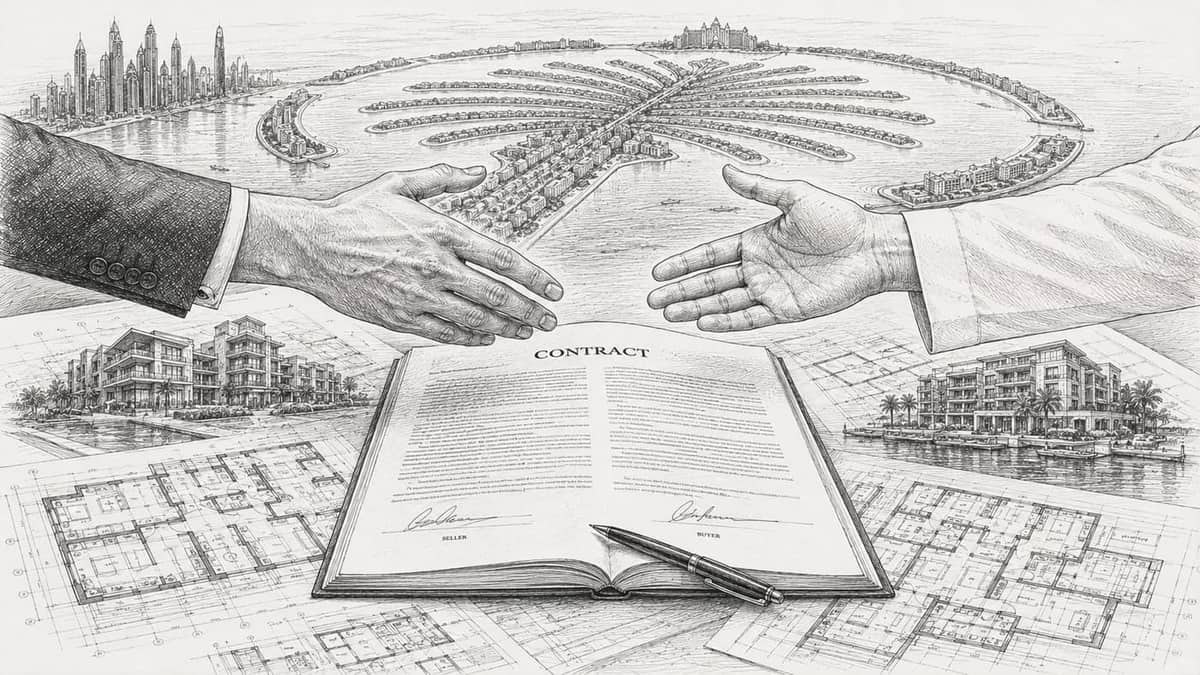
The UAE property market moves quickly. Developers launch projects with urgency, agents present standard agreements as routine formalities, and the pressure to commit — before the unit is sold to someone else — can make thorough review feel like an obstacle rather than a safeguard. This dynamic is precisely the environment in which contract terms most need scrutiny.
The fundamental asymmetry of most property contracts is not incidental. A developer's standard sale and purchase agreement has been drafted by lawyers who understand the UAE's real estate framework thoroughly. Those terms reflect the developer's interests and risk allocation — not the buyer's. The same is true of commercial leases prepared by landlords, and of sale contracts prepared by sellers. Engaging independent legal counsel before signing is the mechanism that rebalances that asymmetry.
What Contract Review Covers
A thorough review of a UAE property contract will examine a range of provisions that can have significant financial consequences if they are unfavourable or unclear:
- Payment terms and milestones — Are the payment obligations clearly linked to construction progress or delivery milestones? What happens if a payment is delayed?
- Completion obligations and timelines — What constitutes completion? What is the developer's obligation if the handover date is missed, and what remedies does the buyer have?
- Title and ownership — Is the title chain clear? Are there encumbrances, mortgages, or third-party interests that affect the property?
- Termination and cancellation rights — Under what circumstances can either party terminate? What are the financial consequences? Are the cancellation provisions balanced?
- Dispute resolution — Which forum governs disputes — UAE courts, DIFC courts, or arbitration? Which law applies? Is the clause enforceable?
- Regulatory compliance — Does the contract reflect compliance with the Dubai Land Department's requirements, RERA regulations, and applicable escrow obligations?
Off-Plan Purchases: Particular Risks
Off-plan property purchases — buying a unit that has not yet been built — carry a distinct risk profile that makes legal review especially important. The buyer is making a significant financial commitment based on plans and projections rather than a completed asset.
In an off-plan purchase, the contract is the product. What it says determines what you actually own, and when.
Key areas of concern in off-plan contracts include escrow arrangements — whether the buyer's payments are held in a regulated escrow account rather than being accessible to the developer for general purposes — delivery timelines and the consequences of delay, the specification of the completed unit and the process for addressing defects, and the developer's financial standing and track record. UAE law has strengthened protections for off-plan buyers in recent years, but those protections only operate effectively when the contract itself is properly structured.
Lease Agreements
Commercial and residential lease agreements in the UAE contain provisions that are not always apparent on a first reading but can have substantial consequences. Service charges, maintenance obligations, permitted use restrictions, rent review mechanisms, renewal rights, early termination provisions, and the applicable dispute resolution process all warrant careful attention before a lease is signed.
For commercial tenants in particular, the terms of a lease can affect the viability of the business conducted from the premises. A poorly negotiated lease can constrain operations, impose unexpected costs, or leave the tenant without adequate remedies if the landlord fails to maintain the property.
Negotiation Is Possible
One of the most useful things an experienced legal adviser can convey to a property buyer or tenant is that standard contracts are not immutable. Developers, landlords, and sellers expect negotiation, even if they do not always invite it. Legal counsel can identify which terms are most important to change, how to frame proposed amendments, and which provisions are unlikely to move — allowing the negotiation to be efficient and targeted.
The goal is not to create friction. It is to ensure that the document you sign accurately reflects the deal you believe you are making, and that your position is adequately protected if something goes wrong. In a market where property transactions involve substantial sums, that clarity is worth securing.